
From 30% Profit to Losing It All: Beware of the "Greed Trap" in the Crypto Bear Market


Original Article Title: How to survive a bear market in DeFi market neutral
Original Article Author: Santisa, Crypto KOL
Original Article Translation: Felix, PANews
Before delving into the content of this article, let's first consider the following story (or perhaps reality).
An "endless" tariff list is announced. Subsequently, the market crashes, and meme coins collapse.
Your original low-risk "mining farm" yield drops from 30% to nearly Treasury bill levels.
This is unacceptable to you. You had planned to retire with $300,000, earning $90,000 annually from "mining." Therefore, the yield had to be high.
So, you start exploring down the risk curve, chasing an imagined level of yield as if the market would favor you.
You swapped blue-chip projects for unknown new projects; you increased your yield by deploying assets to high-risk new fixed-term protocols or AMMs. You started feeling smug.
Weeks later, you begin to question why you had been so risk-averse in the first place. It was clearly a "safe and reliable" way to make money.
Then, a surprise comes.
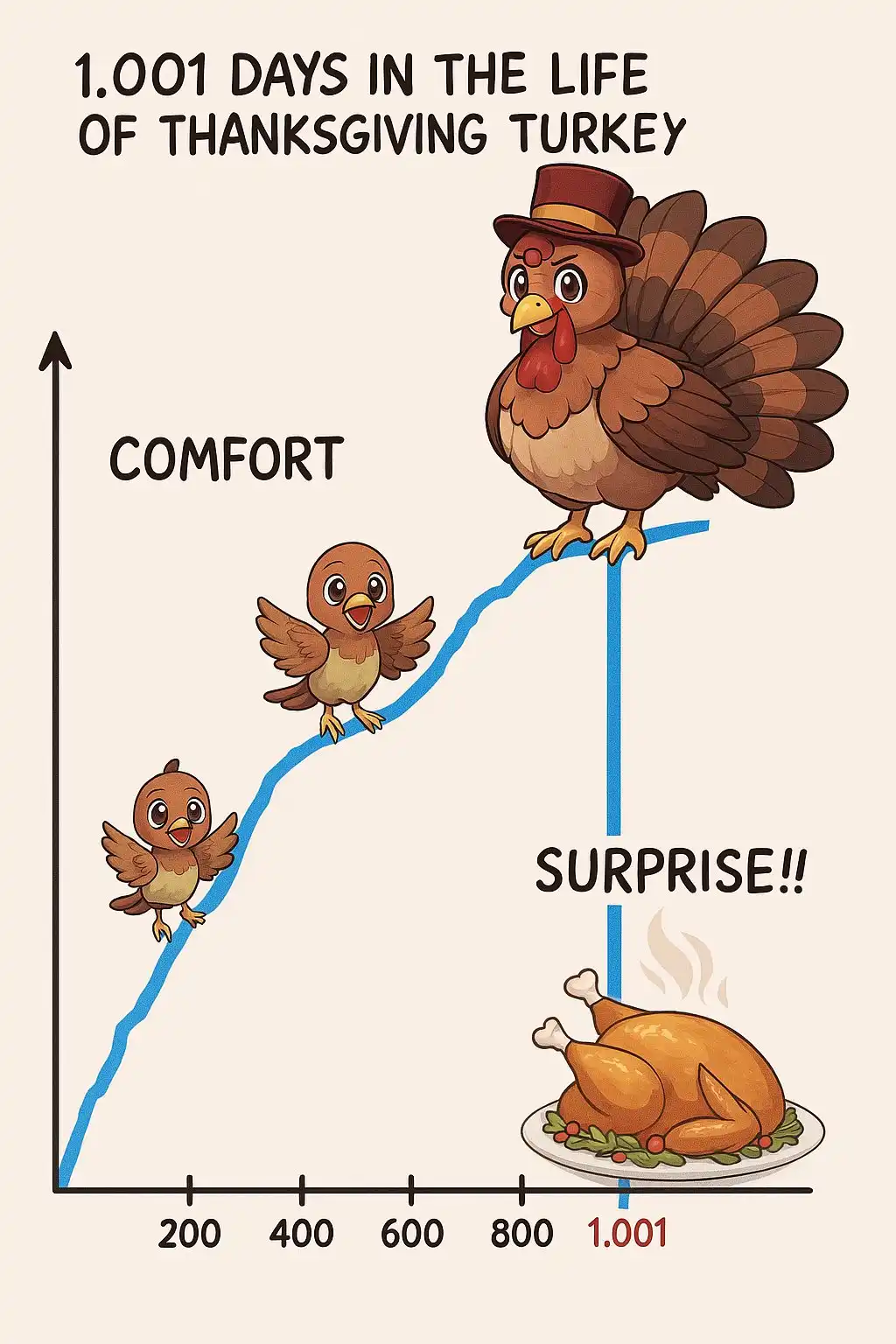
The ultra-liquid infrastructure trading project you entrusted your life savings to, custody, leverage, L2-wrapped, collapses, and now your PT-shitUSD-27AUG2025 has lost 70%. You received some airdropped governance tokens, only for the project to be abandoned months later.
While this story is exaggerated, it reflects the reality that unfolds repeatedly during a bear market when yields are compressed. Based on this, this article will attempt to provide a survival manual for the yield bear market.
People strive to adapt to the new reality, facing market crashes, they increase risk to compensate for the yield shortfall while ignoring the potential costs of these decisions.
Market-neutral investors are also speculators, with their advantage lying in finding unadjusted rates. Unlike their directional trading counterparts, these speculators face only two outcomes: either making a little profit every day or losing a substantial amount in one go.
Personally, I believe that crypto market-neutral rates become severely mismatched during an uptrend, offering alpha higher than their true risk, but conversely during a downtrend, they provide returns lower than the risk-free rate (RFR) while taking on a significant amount of risk.
Clearly, sometimes you need to take risks, and sometimes you need to mitigate risks. Those who fail to see this will become someone else's "Thanksgiving dinner".
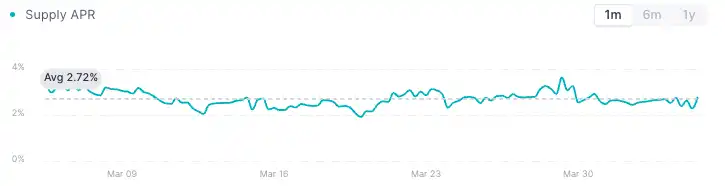
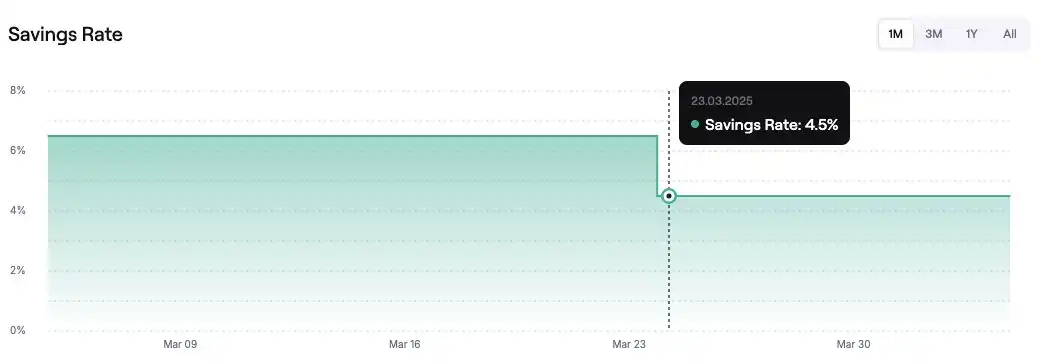
For example, at the time of writing this article, AAVE's USDC yield is 2.7%, and sUSD's yield is 4.5%.
· AAVE USDC bears 60% of the RFR while also bearing smart contract, oracle, custody, and financial risks.
· Maker, while bearing smart contract and custody risks and actively investing in higher-risk projects, bears a fee of 25 basis points above the RFR.
When analyzing the interest rate of a neutral investment in the DeFi market, you need to consider:
· Custodial risk
· Financial risk
· Smart contract risk
· Risk-free rate
You can assign an annual risk percentage to each type of risk, then add the RFR to determine the "risk-adjusted return" required for each investment opportunity. Anything above this rate is considered alpha, while anything below is not alpha.
A recent calculation found that Maker's risk-adjusted required return is 9.56% for a fair compensation.
Maker's current rate is approximately 4.5%.
Both AAVE and Maker hold Tier 2 capital (about 1% of total deposits), but even with substantial insurance, depositors should not accept yields below the RFR.
In the era of Blackroll T-bills and regulated on-chain issuers, this is the consequence of lethargy, key loss, and foolish capital.
So what should you do? It depends on your scale.
If your portfolio scale is small (less than $5 million), there are still attractive options. Check out protocols that are more secure in all chain deployments; they often provide incentives on some lesser-known chains with lower TVL or engage in basic trading on high-yield, low-liquidity perpetuals.
If you have a large amount of capital (over $20 million):
Buy short-term Treasury bills and wait for things to evolve. The favorable market conditions will eventually return. You can also look into OTC trading; many projects are still looking for TVL and are willing to significantly dilute their holders.
If you have LP, let them know, even let them exit. The on-chain treasury bond is still below the real trade. Don't let the untuned risk-return ratio cloud your judgment. Good opportunities are obvious. Keep it simple, avoid greed. You should stay here for the long term, manage your risk-return properly; if not, the market will take care of it for you.
Related Reading: Comprehensive Data Analysis: Where Did the Funds Flow Behind the $100 Billion Growth of Stablecoins? Shitcoins didn't rise, where did the money go?
You may also like

Morning Report | Coinbase Ventures makes its first investment in ENA; SpaceX plans to set the IPO price at $135 per share

Full text and analysis of the speech by the CEO of SanDisk at the 42nd Annual Strategic Decision Conference of Bernstein

Bitcoin Price Prediction 2030: Ark Invest Forecasts $710K

WEEX Review 2026: Fees, Security and Trading Features

SOL Price Today: Live Solana Price, Charts & Market Data

What Is a Bitcoin ETF: Spot vs Futures Explained

Why Is Bitcoin Dropping 15% While Nasdaq Hits Record Highs?

Morning Report | Robinhood completes acquisition of WonderFi for $180 million; Anthropic submits IPO draft application to SEC confidentially; Google plans to raise $80 billion in financing

WSJ: Hyperliquid is becoming Wall Street's crypto "convenience store"

Why do I still have confidence in ETH?

CRCL surges and plummets, COIN follows with a dive: The real battle for interests behind the CLARITY Act

Tokenized US stocks are not the "liquidity killer" of the crypto market

What Is TradFi and Why Is Everyone Talking About It in 2026?

From Poland to Paris: A Look Back at WEEX's Global Community Journey in May 2026

WEEX WXT Eco Carnival: How to Join WXT Events and Plan Trading Tasks
The WEEX WXT Eco Carnival is an ecosystem campaign built around WEEX Token (WXT), designed for users interested in platform tokens, spot trading, futures trading, deposit tasks, and referral rewards.

Morning Report | Strategy sold 32 BTC and over 800,000 shares of MSTR last week; Binance officially announced its U.S. stock trading portal; Polymarket reached an exclusive partnership with OneFootball
Zhou Hang: How much is SpaceX really worth?

IOSG: From Coinbase to Upbit: How a Token Completes a 28-Day Journey of Taking Over
Morning Report | Coinbase Ventures makes its first investment in ENA; SpaceX plans to set the IPO price at $135 per share
Full text and analysis of the speech by the CEO of SanDisk at the 42nd Annual Strategic Decision Conference of Bernstein
Bitcoin Price Prediction 2030: Ark Invest Forecasts $710K
WEEX Review 2026: Fees, Security and Trading Features
SOL Price Today: Live Solana Price, Charts & Market Data
What Is a Bitcoin ETF: Spot vs Futures Explained


