
Bitcoin Miner Survival Threshold: Plummeting Transaction Fees and Soaring Costs, What Lies Ahead?

Original Article Title: "Bitcoin Miners' Survival Line: Plunging Transaction Fees and Soaring Costs, What Lies Ahead?"
Original Article Author: Alvis, Mars Finance
Bitcoin is now at a real risk of being "done for" without a new ecological hotspot. Miners' survival pressure has reached its limit, with transaction fees plummeting and costs skyrocketing, causing many small miners to consider shutting down. Once miners start to exit, hash rates decrease, block generation slows down, and the network's security is threatened. Moreover, in a situation of price instability, without new ecological developments to drive demand growth, Bitcoin will fall into a downward spiral.
Income Squeeze: Miners' Profits Face Multiple Pressures
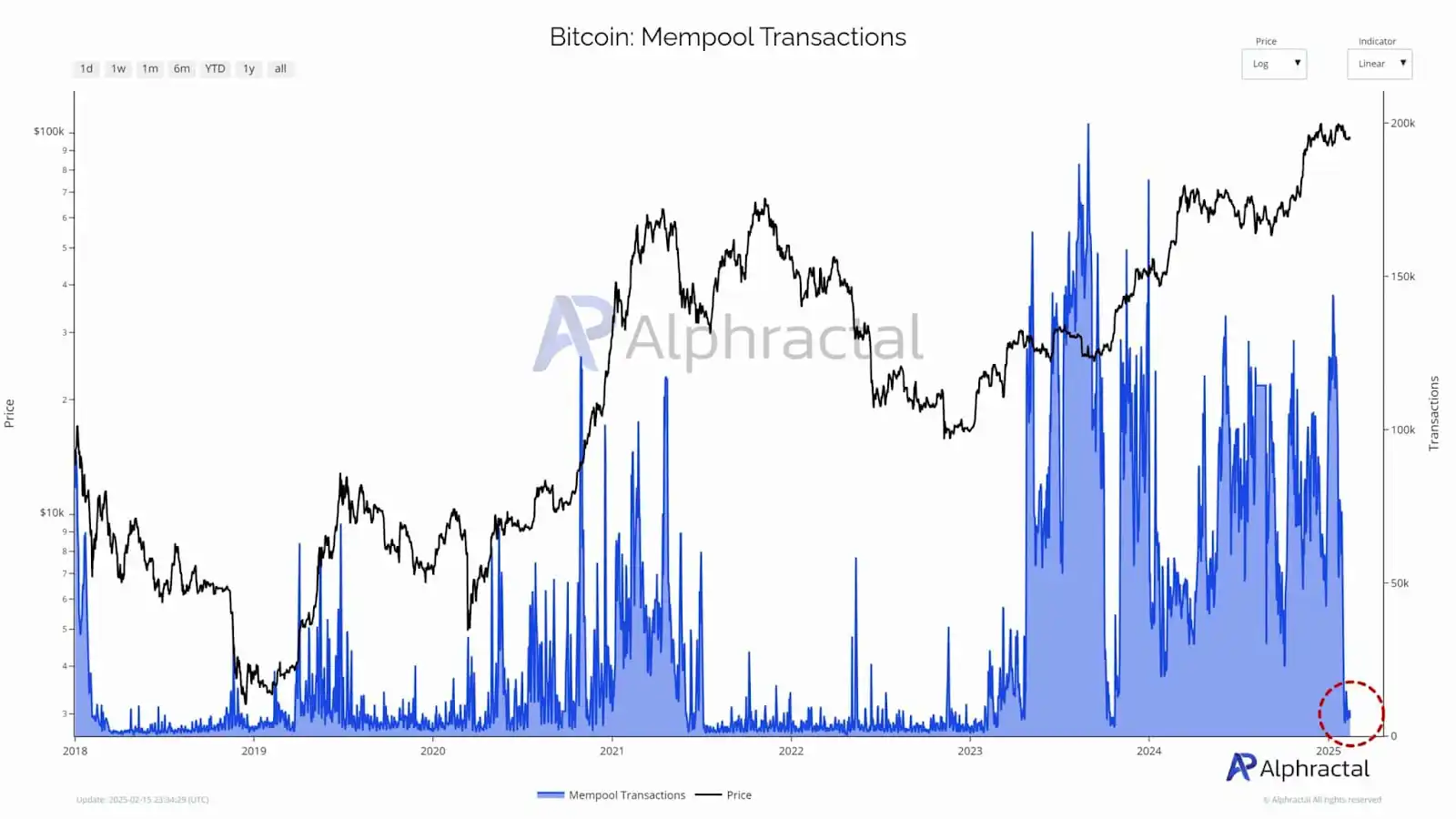
The profitability of Bitcoin mining has significantly deteriorated, with several key indicators showing a weakening profit potential. Firstly, the unconfirmed transactions in the Bitcoin memory pool have dropped to a multi-year low, indicating reduced network demand, directly impacting miners' transaction fee income. Historically, a decrease in transaction activity has often led to a bear market, which, although not necessarily implying a price drop, may suggest structural changes in the network.
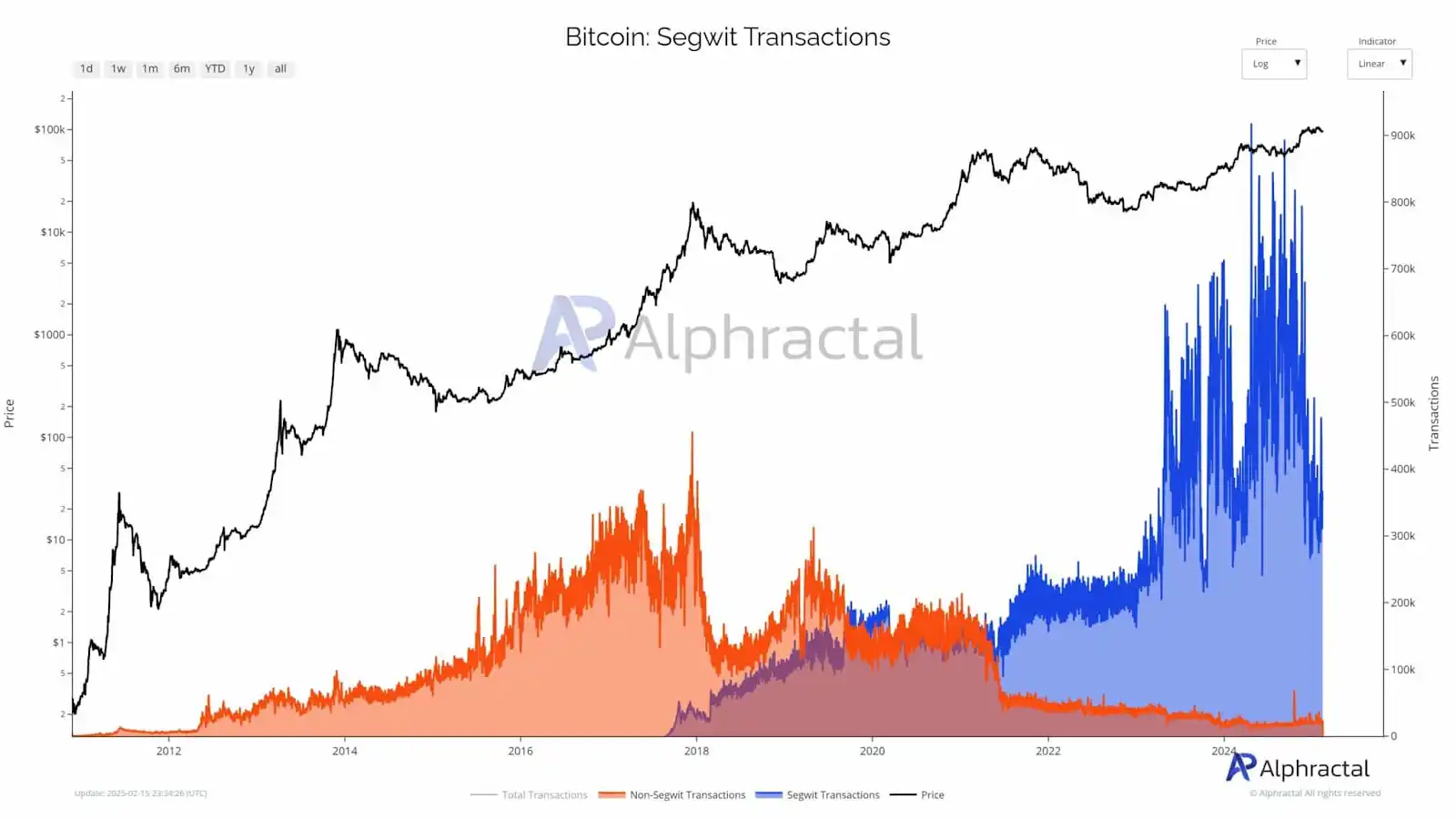
Furthermore, the gradual decline of SegWit transaction types has reduced network efficiency, further increasing block space requirements, squeezing miners' income potential. Despite the rise in Bitcoin prices, the downward trend in revenue highlights the impact of rising network difficulty and intensified competition.
Industry Consolidation Accelerates: Small Miners Face Exit Risk
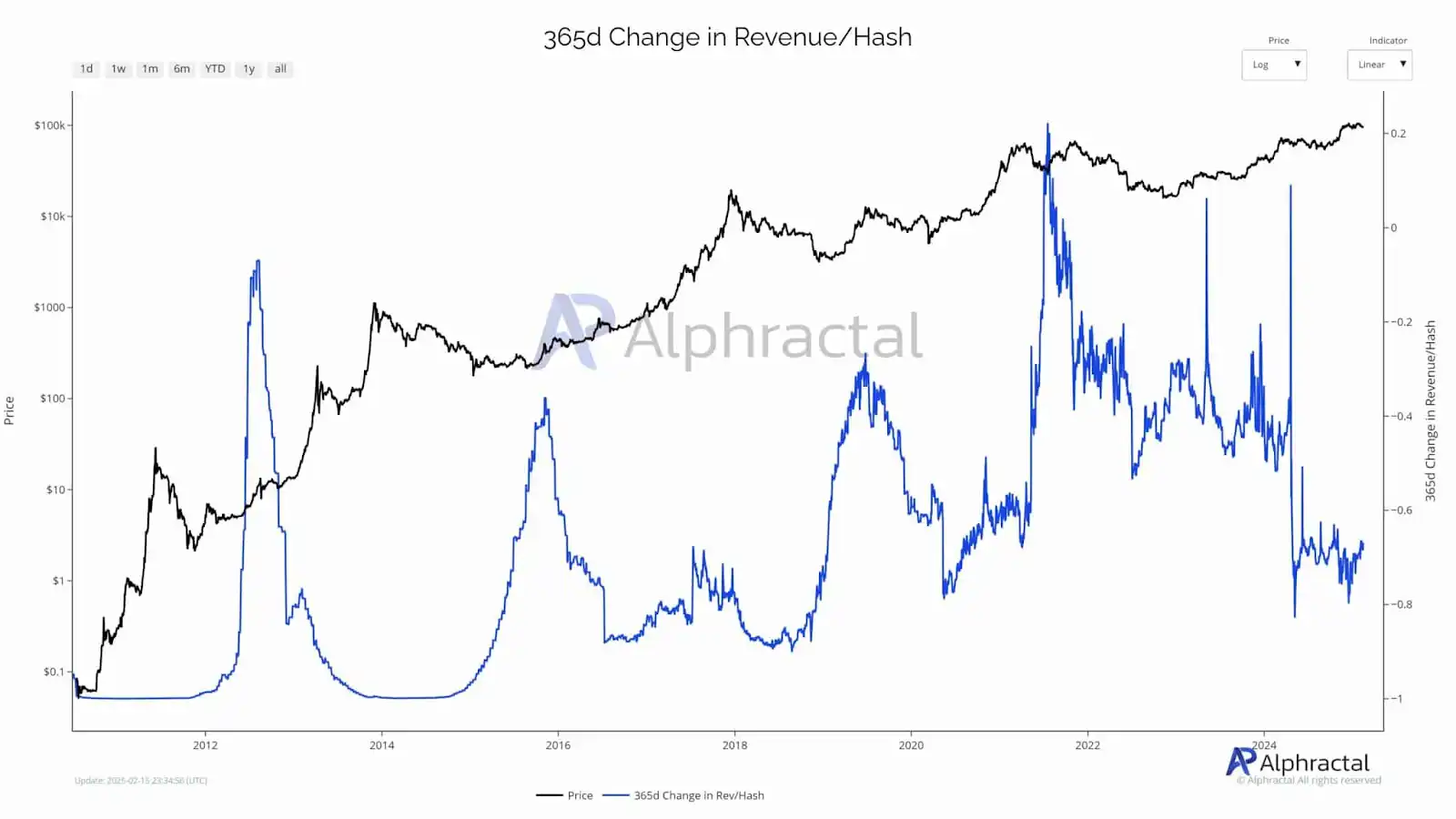
A key miner indicator, revenue/hash rate, is at a historical low, with diminishing returns indicating that rising network difficulty and intensified competition are eroding profitability.
With the block reward halving, particularly small miners are facing survival pressure. Decreased profitability and reduced transaction fee income put small enterprises at risk of exiting the market, accelerating industry consolidation. In the future, only well-capitalized, technologically advanced large miners will be able to maintain competitiveness, leading to increased market concentration.
Network Difficulty Increases: Rising Costs Force Miners to Seek Survival Strategies
Bitcoin network difficulty has hit a new high, putting miners under greater cost pressure. With rising energy and hardware costs, especially for small miners with outdated equipment, survival pressure intensifies. Some miners are turning to low-cost, sustainable energy sources, such as hydroelectric or geothermal power, while some mining companies are seeking breakthroughs through diversified income sources or mergers and acquisitions.
This trend may accelerate the centralization of the industry, where the most well-capitalized and efficient miners will take the lead, impacting Bitcoin's decentralized nature. In the future, changes in miners' geographic distribution and mining security practices may raise concerns about network security.
Market Rebalancing: Increased Industry Threshold
As operating costs continue to rise, inefficient miners will be eliminated, leading to a natural industry "rebalancing." This change may further promote industry centralization, where only large-scale miners can survive in fierce competition, solidifying Bitcoin mining as a high-threshold industry.
However, market centralization also raises questions about Bitcoin's decentralized ethos. The reduction of dominant miners could concentrate network security in the hands of a few miners, potentially affecting the network's long-term stability and resistance to censorship.
Impact on Bitcoin
In the short term, Bitcoin miners face dual pressure from declining transaction fees and rising costs, which may cause small miners to exit the market, leading to a decrease in network hashrate and tightening Bitcoin supply. The compression of miner revenue may affect market confidence in Bitcoin, causing short-term price volatility and possibly threatening the network's decentralization, introducing security risks.
In the long run, with technological innovation and optimized energy costs, miners may regain some profitability, lower operating costs, helping alleviate profit pressures and stabilize the market. While there may be short-term downward price risks, with sustained demand growth and tightened supply, Bitcoin prices may trend upward in the long term, especially as market demand for Bitcoin steadily increases.
Bitcoin currently urgently needs a new ecosystem, clearly more than just speculative trading of "buying the dip." It needs more use cases, smart contracts, decentralized applications, and even a brand-new financial system to support it.
If Bitcoin lacks a strong enough ecosystem, once miners cannot maintain profitability, the entire network's operation will become challenging, and market trust in Bitcoin will be shaken. Miner exodus could be a "crisis" in Bitcoin's future outlook, while ecosystem development flourishing is the key to Bitcoin's survival.
Disclaimer: This article does not constitute investment advice. Users should consider whether any opinions, views, or conclusions in this article are suitable for their specific circumstances and comply with relevant laws and regulations in their country or region.
You may also like

TaiJi completes $3.5 million strategic financing, with investments from Castrum Capital, Becker Ventures, and Coinvestor Ventures

Bitcoin Stuck Near $73K? How Traders Are Finding Rewards in a Sideways June Market

What Is a Bitcoin ETF? A Simple Guide for 2026

Best AI Crypto Coins 2026: Top 7 Tokens Ranked by Data

How to Stake Solana: A Step-by-Step Guide for 2026

Exclusive Interview with Alpaca CEO: What is the background of the US stock underlying service provider behind Binance and Bitget?
Variant: Three types of L1 assets are highly likely to become the main means of value storage

Does the performance on Perp DEX become an "invisible threshold" and "amplifier" for new coins to go live on CEX?

Zhou Hang: How much is SpaceX really worth?

IOSG: From Coinbase to Upbit: How a Token Completes a 28-Day Journey of Taking Over

Morning Report | Strategy sold 32 BTC and over 800,000 shares of MSTR last week; Binance officially announced its U.S. stock trading portal; Polymarket reached an exclusive partnership with OneFootball

Guaranteed Price Now Live on WEEX: Execute with Greater Precision
Morning News | Michael Saylor releases Bitcoin Tracker information; Aave releases post-attack investigation on Kelp rsETH bridge; Gravity Bridge announces service suspension after being attacked

BIS's latest research: The future of stablecoins and the global monetary landscape

Interview with macro master Raoul Pal: The AI competition is giving rise to an "economic singularity," don't easily give up your chips in the next four years

Wang Chuan: How can one not feel anxious after the neighbor Old Wang made thirty times his investment in storage stocks? (Six) - The Trap of Homogeneous Products

"Trapped in the cryptocurrency world: Don't let the anxiety of missing out force you onto the most dangerous last train."

The broken defense of Solana's guardians: In order to tear apart Hyperliquid, they actually picked up the script that Ethereum once criticized itself?
TaiJi completes $3.5 million strategic financing, with investments from Castrum Capital, Becker Ventures, and Coinvestor Ventures
Bitcoin Stuck Near $73K? How Traders Are Finding Rewards in a Sideways June Market
What Is a Bitcoin ETF? A Simple Guide for 2026
Best AI Crypto Coins 2026: Top 7 Tokens Ranked by Data
How to Stake Solana: A Step-by-Step Guide for 2026
Exclusive Interview with Alpaca CEO: What is the background of the US stock underlying service provider behind Binance and Bitget?


